A lot of attention goes into finding the right engineer.
Companies define the role, review profiles, run technical interviews, compare candidates, negotiate terms, and finally make a decision. Once the right person accepts, the hardest part can feel complete.
In reality, that decision starts a different process.
A new engineer still needs to become part of the team, understand how work gets done, gain access to the right systems, establish clear ownership, and start contributing. Behind the scenes, contracts, payroll, compliance, administration, and ongoing support also need to work properly.
How well those pieces come together has a direct impact on how quickly a new hire becomes useful engineering capacity.
A start date and a productive start are two different things
Getting someone through the door is one milestone. Getting them into the flow of the team is another.
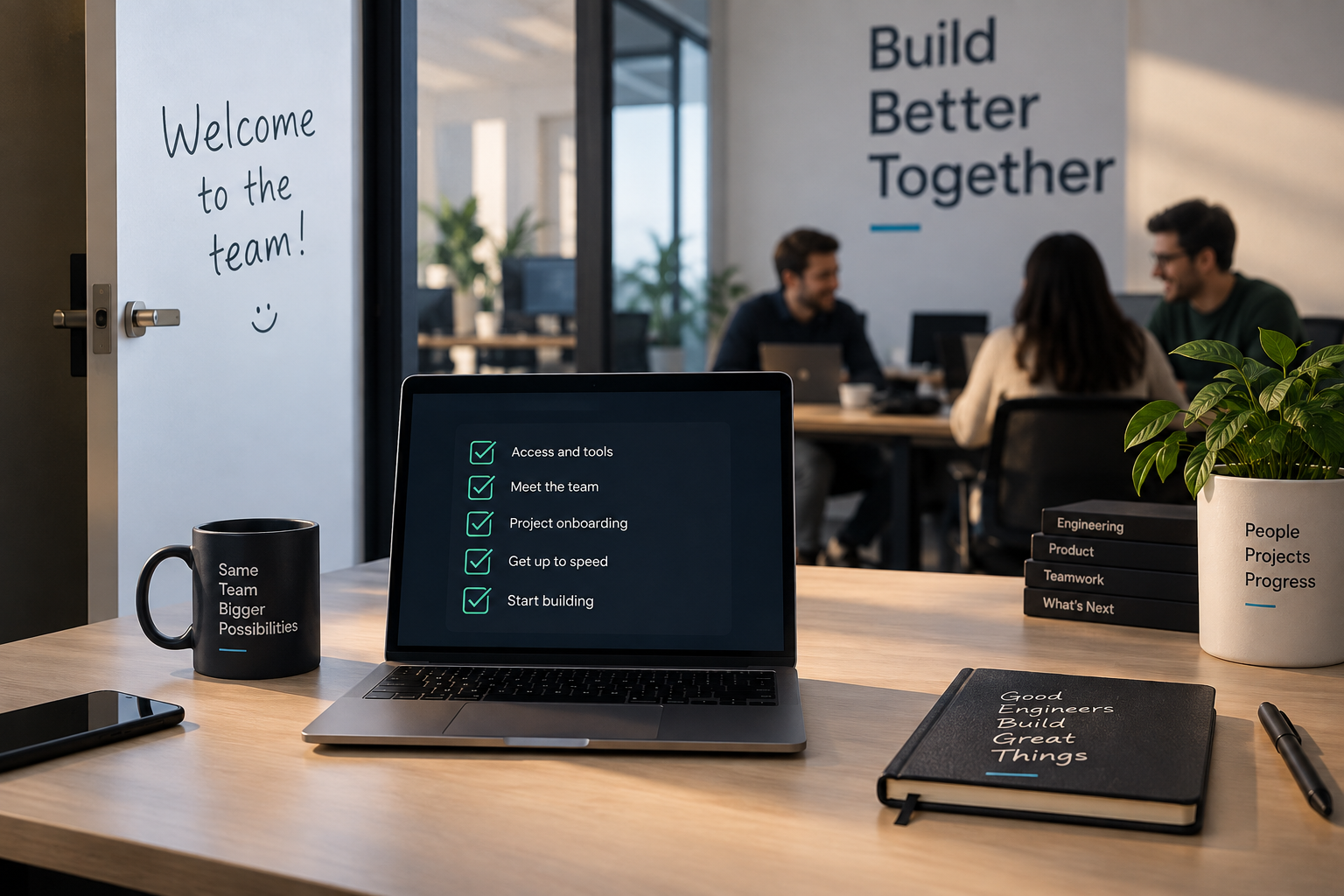
The first days matter because they establish how the relationship will work. The engineer needs access to repositories, communication channels, project management tools, documentation, development environments, and the people who can provide context.
They also need clarity.
What are they expected to own? Who makes technical decisions? How does the team communicate? What does a good first month look like? Which meetings matter? Where should they go when they are blocked?
A well-structured onboarding process answers those questions quickly and allows the engineer to focus on understanding the product and contributing to it.
This becomes particularly important when external engineers join an existing team. Creating a parallel workflow adds unnecessary distance. The smoother model is usually the simplest one: engineers work in the client’s time zone, use the same tools, join the same ceremonies, and operate within the same engineering structure as everyone else.
They become part of how the team already works.
The best administration happens quietly
There is another side of adding external engineering capacity that developers and engineering managers should barely have to think about.
Contracts need to be correct. Payments need to arrive on time. Local requirements need to be handled appropriately. Changes in allocation, overtime, reporting, and other administrative matters need somewhere to go.
For companies hiring internationally, those responsibilities become more complex as teams expand across countries.
The operational model around the engineer therefore matters almost as much as sourcing them in the first place. Every administrative issue that reaches an Engineering Manager creates another task competing with product delivery, technical decisions, and team leadership.
A strong staff augmentation model keeps that work in the background.
The client should be able to manage the engineer’s work directly while someone else takes care of the infrastructure that makes the engagement possible.
Someone still needs to own the relationship
Low administrative involvement should not mean disappearing once the engineer starts.
Projects change. Responsibilities evolve. Teams reorganize. An engineer may need additional support, the client may want to adjust an allocation, or something may simply require attention.
That is why ongoing account and administrative support matters.
There should be a clear point of contact who understands the engagement and can deal with operational issues without turning every small change into a new process. The engineering relationship remains between the client and the developer, while the supporting relationship continues in the background.
Done well, this structure is almost invisible. The client gets the flexibility of external capacity while the engineer operates as part of the existing team.
Continuity needs a plan too
Even a successful placement will not necessarily last forever.
Projects end. Priorities change. People move. Sometimes an engineer who looked like a strong match turns out to be less suitable once the work begins.
Companies should know what happens in those situations before they happen.
If an important engineer leaves unexpectedly, restarting a traditional hiring process can reopen the same capacity gap the company originally worked to solve. The team absorbs the work again, ownership shifts, and delivery begins adjusting around the missing person.
Replacement should therefore be part of the operating model rather than an emergency response.
For DevRank engagements, that means staying involved throughout the relationship and being able to activate the network again when a replacement is required, with the goal of restoring that capacity quickly and minimizing disruption to the client’s team.
The real product is continuity
Staff augmentation is often evaluated through the quality of the profiles presented at the beginning of the process. That matters enormously, but it captures only one part of the experience.
The complete model stretches much further.
It starts with understanding what capability the team needs. It continues through candidate selection and onboarding. Then come integration, contracts, payroll, compliance, ongoing administration, support, and eventually replacement or offboarding when circumstances change.
Each step should make it easier for the engineering team to keep moving.
This is the principle behind how DevRank structures its engagements. Clients manage the engineering work directly. Developers integrate into the client’s existing team and time zone. DevRank handles the operational layer around that relationship and remains available as needs change.
The objective is simple: turn additional engineering capacity into something the client can use without creating another operational burden to manage.
Saying “you’re hired” is an important moment.
What happens next determines how much value that hire can actually create.